
AEDS
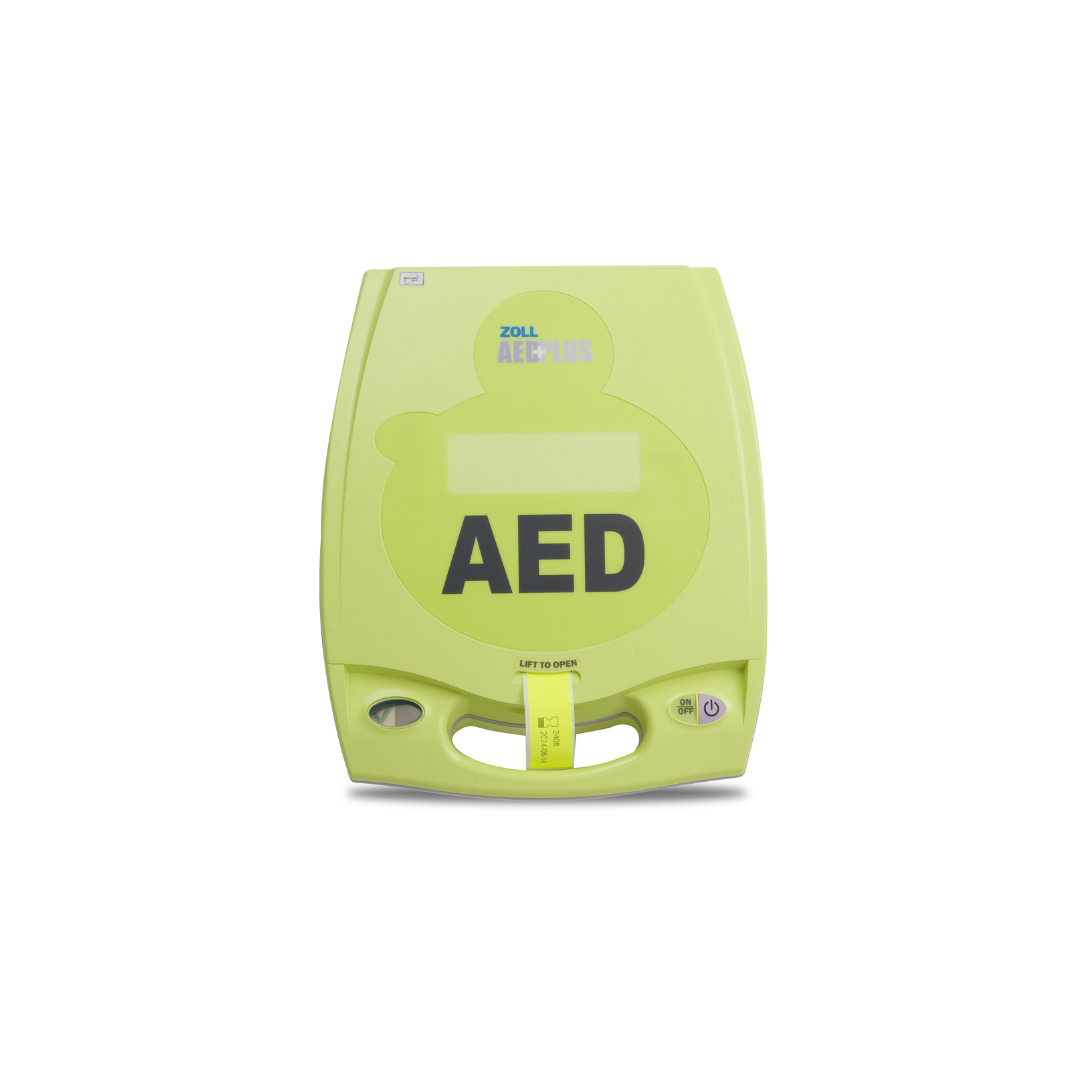
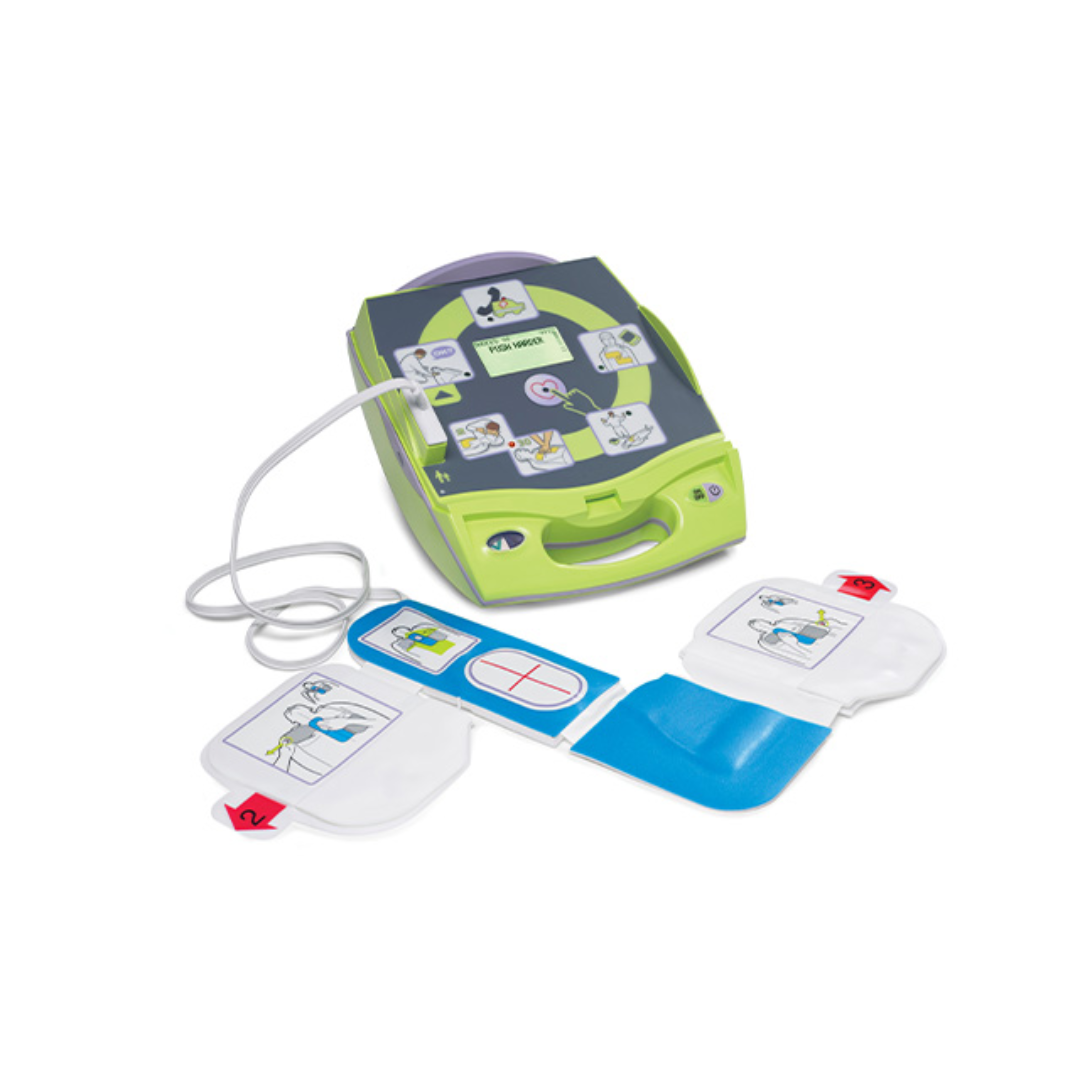
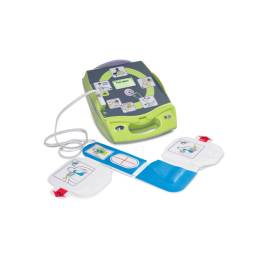
Zoll Plus AED (Pre-Owned)
For commercial sales, please email sales@alertfirstaid.co
Note Pads and battery expiration dates vary. Contact us for more info.
When it comes to helping a victim of sudden cardiac arrest, not all AEDs are created equal.
Unlike other AEDs, ZOLL AEDs support rescuers with integrated, real-time feedback on compression rate and depth. Recommended by medical professionals, the ZOLL AED Plus defibrillator with Real CPR Help technology guides rescuers in performing high-quality CPR and provides integrated audio and visual feedback to support you throughout the rescue.
This package includes:
- ZOLL Plus AED
- Set of Lithium Batteries
- Soft carry case
- Training DVD
- 7-year warranty with registration
ZOLL AED Plus Features
Smart Technology
Lives are not saved by AEDs alone. People save lives - using AEDs. Real CPR Help guides you in delivering high-quality CPR. Integrated, real-time feedback provides visual and audio prompts to "Push Harder" or confirms when you are doing "Good Compressions," keeping you on track to administer potentially life-saving CPR.
In addition to step-by-step audio prompts, Real CPR Help technology includes a compression depth indicator that provides real-time visual guidance to help you deliver the best possible CPR.
The force required to depress the chest during CPR varies with the patient’s size and build. The standard measure of chest compression quality, however, is not force but depth. The Real CPR Help® technology in ZOLL’s CPR-D-padz® includes a hand-placement locator, an accelerometer, electronics, and a processing algorithm that work together to measure vertical displacement in space as each compression occurs.
Ready for the Rescue
Your AED needs to be ready to use at a moment's notice. The AED Plus defibrillator can withstand many environmental conditions and has an automatic self-test capability, so you can be sure it's ready for the rescue. And an industry-leading five-year shelf life for batteries and pads means fewer replacements, less maintenance, and a low total cost of ownership.
One Size Fits All
ZOLL’s one-piece electrode design accounts for anatomical variation. Based on extensive human data, CPR-D-padz meet the anthropometric chest characteristics of 99% of the population. If needed, the lower (apex) electrode can be separated and adjusted to accommodate the remaining 1% of the population.
Simplified Placement
Affixing two separate electrode pads to the patient’s bare chest can be confusing to a lay rescuer.
ZOLL’s CPR-D-padz simplify this step by guiding placement of the red crosshairs at the center of the imaginary line connecting the patient’s nipples. Once in place, the hand-locator and the two electrode pads fall naturally into optimal position for both defibrillation and CPR.
Five Year Shelf Life
All AED electrodes transmit defibrillating electricity into the patient via metal in close contact with a salt-infused gel that is positioned between the metal and the skin. Over time, however, the salt in the gel will corrode the metal and eventually compromise electrode functionality. ZOLL’s novel electrode design includes a sacrificial element that prevents significant corrosion for five years, which is unmatched in the market today.
ZOLL AED Plus Features
- Real CPR Help provides real-time CPR feedback on the rate and depth of chest compressions
- Audio prompts and visual icons complement the American Heart Association's Chain of Survival
- Easy-to-place, one-piece CPR-D-padz electrodes with a 5-year shelf life
- Fully automatic feature available - unit will deliver a shock on its own when a shockable heart rhythm is detected (semi-automatic will prompt to deliver shock with the push of a button)
- Rugged design with an IP (ingress protection) rating of IP55 for dust and water
- Can withstand conditions like extreme temperature, altitude, vibration, and shock
- Off-the-shelf lithium batteries (Duracell 123a) with a 5-year battery life
- Intelligent pediatric capability: Pedi-padz pediatric electrodes can be purchased separately for children up to 8 years old or weighing less than 55 pounds
- Automatic self-testing helps ensure a state of readiness
- Soft carry case for easy travel
- 5-year warranty (7-year warranty with online registration)